
There is a saying at the big end of town: “Simple answers are for those who never look beneath the surface.” When it comes to business valuation multiples, the market has never been more awash in confident myths. “Just apply the magic number 3 as your multiple and off you go!” they say. Tempting, perhaps, but dangerously naïve. If only the world obliged by following formulas as rigid as those in a child’s arithmetic book.
Let us pull apart the most persistent myths surrounding multiples in 2025 and examine the underlying realities that matter to vendors, investors, and all those with a stake in the outcome.
Multiples: Much More Than a Number
It is a persistent fiction that industry multiples offer a shortcut to an authoritative valuation. The truth is grittier. Savvy buyers and their advisors ask: Is the supposed “industry standard” appropriate for this business, in this state, at this moment? Multiples might provide a starting point, a weather vane. They are not a scientific instrument, and they ignore unique operational and risk profiles within each enterprise. To anchor value, a professional will adjust for the distinct circumstances that set your business apart, for better or worse.
If relying on a single multiple formula really got deals done, there would be no need for a marketplace, and no courtrooms grappling with contested valuations. As Warren Buffett remarked, “Price is what you pay, value is what you get.” Never confuse the two.
What Actually Underpins Premiums in 2025?
Here is one truth; there are presently some industry segments tanking and there are certain segments that are defying gravity. Today’s market has its champions, tomorrow’s “market darlings” will be different.
Observing where private equity is expanding its reach, and where debt is available is a pretty savvy way to also observe growing multiples.
The following three themes are likely signposts for finding elevated multiples in 2026:
- Scale and Growth Prospects: Premiums are rarely found in flat-lining businesses, regardless of ‘comparisons.’ It accrues to those with consistent revenue growth, and a credible plan for more; something only supported by robust systems, sound governance, and management teams that inspire confidence. Businesses that scale efficiently, especially if they have technology or IP on their side, are fundamentally more attractive.
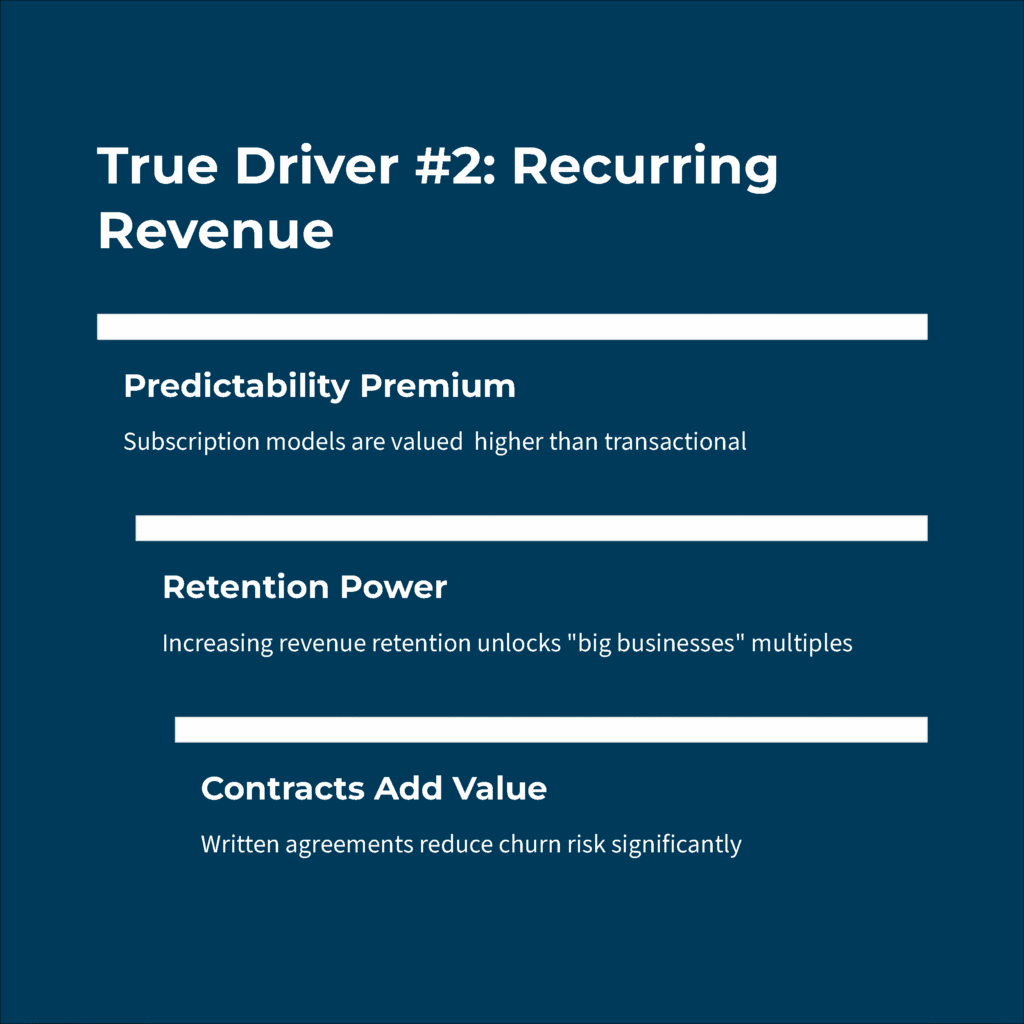
- Recurring and Diversified Revenue: Multiples soar for businesses that can demonstrate not just a record, but the promise of dependable, recurring income from multiple channels. The more diversified the customer base, and how they arrive at your metaphorical “front door” the more durable the revenue stream, a detail not lost on any rational valuer. One-trick ponies attract suspicion, not premiums.
- Competitive Moat: If there is a true competitive advantage, a product, process, or reputation that competitors struggle to match, multiples lift accordingly. Private equity in particular seeks resilience, scalability, and a strategically competitive position that allows the business to weather shocks and capitalise on opportunity.


Yet, even in 2025, some owners believe that all businesses within a sector deserve the same multiple. The lived reality tells a different story. Data from Australian transactions in 2025 clearly show wide dispersion in multiples, not just between industry segments but also inside each segment. This range reflects underlying business fundamentals, not just market averages.
The Limits and Dangers of Applying ‘Market Myths’
Believing that a high multiple alone signals success is a trap. Overvaluation can be as harmful as the other side of that particular coin, undervaluation. Inflated numbers breed expectations that inevitably collapse deals. Equally, relying on historical averages from outdated transactions or overseas markets, without scrutinising their relevance to the subject business, leads only to costly disappointment.
Professional discussion in 2025, among both practitioners and the courts, has driven home that premiums and discounts are seldom supported by simple arithmetic. Their application demands careful, contemporary analysis of the parties, the deal context, and the genuine value-enhancing features present. No two businesses, no two deals are truly alike. Comparisons are (and should be) scrutinised for believability.
What Should the Owner or Adviser Do Next?
If you are a business owner, professional adviser, or litigator, dispense with formulaic thinking. Dissect the drivers: Where are the margins robust? Is projected growth credible or simply wishful thinking? What makes this business irreplaceable in its market niche? Do not let the myth of the market multiple obscure the particular strengths or weaknesses of the business in the real world.
The International Valuation Standards exist precisely because real value cannot be captured by back-of-the-envelope equations. It is diligence, technical skill, and a clear-eyed assessment of commercial realities that deliver defensible, accurate outcomes. In the words of Peter Drucker: “What gets measured gets managed.” Are you measuring myth, or are you measuring substance?

Consider this: if you spend your time avoiding risk, who is busy embracing it and overtaking your business? If you would like to put evidence, experience, and competitive edge behind your next move, contact Kevin Lovewell directly on 1300 551 757.