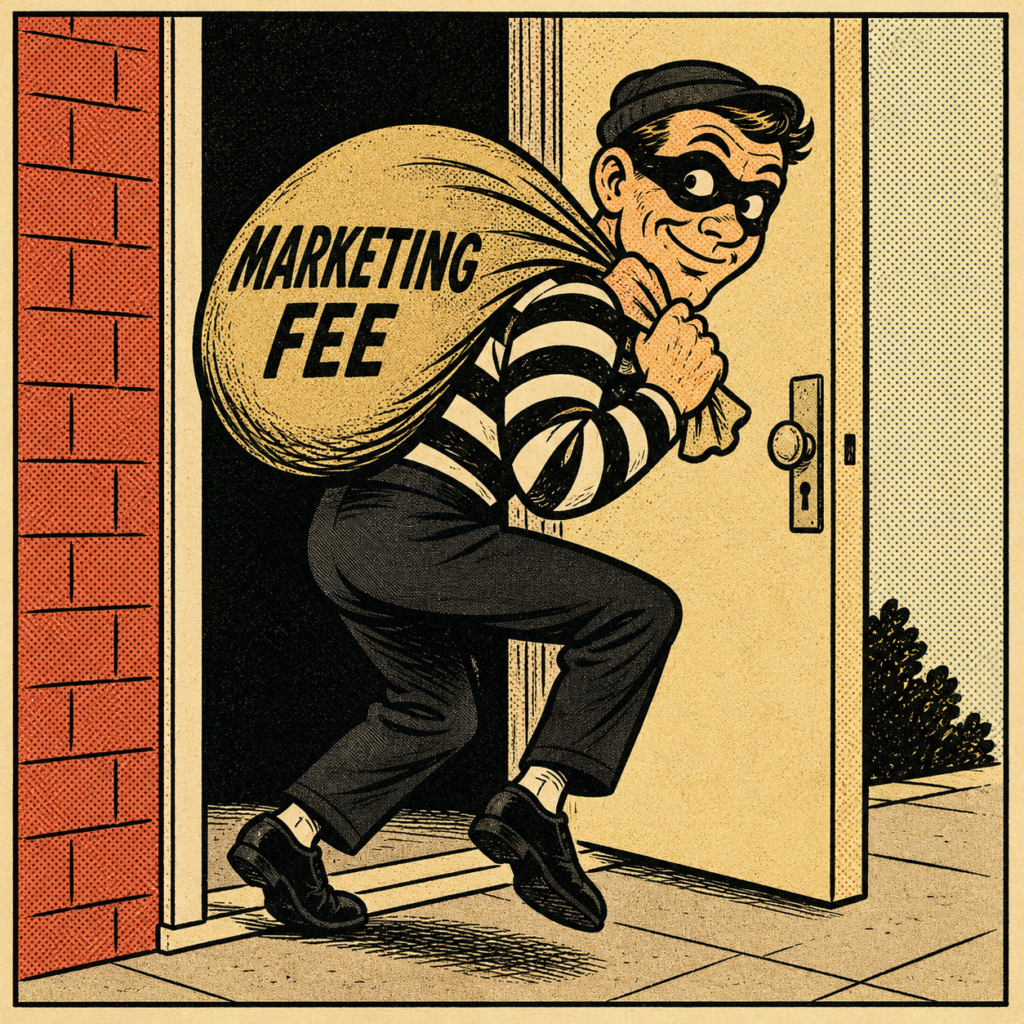
A brokerage firm in my industry recently asked a prospective client for a $20,000 marketing fee. This was not a quote for photography, listing platforms, advertising, print, or staging. Nor was it explained, itemised and totalled. It was twenty thousand dollars, labelled “marketing,” before any appointment had even been signed or a written opinion of value given.
I want to be blunt here; That fee is hardly believable. I am not a real estate agent. I do not sell houses in the street. I am a business broker and intermediary — Registered Business Valuer, MBA, two decades in accounting, valuation and M&A — and I sell businesses, often worth far more than the house next door.
Under Queensland’s Property Occupations Act 2014, my licence and my client’s appointment are governed by the same legislation that governs a suburban house sale. There is no separate business-agent framework. S26 folds us into the one real estate agent licence. Whatever the law says a “marketing fee” is, it says the same to me as to any residential agent — and that is precisely why the magnitude of this fee offends me.
Broking, in any form, is a brutal way to earn a living in the early years. Most who try it don’t survive to their second commission cheque. So let me be clear about who this isn’t aimed at. Those who have earned the right to be well paid. This is a genuinely rewarding profession once you’ve proven you can do the work. This isn’t aimed at someone trying to make rent off their first deal. It’s aimed at the business model that puts them there, by dressing the wages mechanism up as marketing.
I call that model the “listing machine.” It wins volume by out-promising the competition, not by out-performing it — the listing, and the fee attached to winning it, is the income they seek. A $20,000 marketing promise beats an honest quote almost every time, because it’s easier to promise a value sometime in the future than to earn the appointment on service and track record. The cost isn’t only borne by the client who hands over money that will never be spent the way the word implies. It’s borne by every broker and agent who quotes honestly and loses the appointment to a bigger promise that was never going to be kept. That’s what grates — not the hustle, it is the dishonesty sitting inside that word “marketing.”
Here is what the law actually says that money is for. Section 104 of the Property Occupations Act 2014 requires an appointment to disclose marketing and advertising as expenses the agent is “authorised to incur” — spending on the client’s behalf, not a fee for service. The Agents Financial Administration Act 2014 treats money paid for marketing as trust money: sections 15 to 17 describe it as a refund of an expense “authorised to incur and did incur.”
Section 22 on Trusts is unambiguous — funds can only be drawn against an expense when it becomes payable, and once the matter is finalised, whatever remains in trust must go back to the client within 14 to 42 days. Unspent marketing money is never the agent’s to keep.
My statement is not an obscure interpretation. The Office of Fair Trading tells consumers an agent “must be fully accountable” for marketing money, must hold receipts, and must reimburse from trust. Real Estate Institutes compliance commentary lists failure to itemise and account for marketing as one of the most common defects its professional indemnity lawyers see. The regulator and the industry body have both already named this as a known systemic weakness.
Some firms sidestep their obligations by invoicing a lumpsum “marketing package” directly, outside of the trust. Arguing what should or should not be deposited into the agents trust account DOES NOT in any way abrogate the agents’ responsibility to spend marketing money on marketing activities. An ambiguous, non-refundable $20,000 shared between the principal and the agent does not meet the description of marketing. It meets the description of a fee.
Advertising and marketing still require disclosure as an authorised expense under s104 — but these practitioners believe skipping itemisation, receipts and the required accountability under the law is not just permissable – it pays the rent.
Before you sign anything, ask three questions: Can you itemise the planned expenses? Will I see receipts? Is the unspent portion refundable?
So here is my challenge — to the listing machines, and to anyone in this profession comfortable enough to let this practice slide. Call it what it is. If it’s a fee, price it as a fee and defend it on those terms.
If you call it marketing, itemise it, hold the receipts, and refund what you don’t spend — because that is what the law already says the word means, whether you’re selling a family home or a business that someone spent their working life building. Anything less isn’t a marketing strategy. It’s a bet that your client won’t ask the question I’m asking now.
~ Kevin Lovewell