I am a Registered Business Valuer, and every so often a judgment comes along that reads like a parable written for my own profession. BBHF Pty Ltd v Sleeping Duck Pty Ltd & Ors [2024] VSC 320, decided by Justice D of the Supreme Court of Victoria in 2024, is one of them.
The plaintiff was Mr D, acting through his company, BBHF. In 2017, he invested in the Melbourne mattress company Sleeping Duck, becoming an adviser and minority shareholder. Years later, after his stake had been diluted from ten per cent to 9.09 per cent through an employee share option plan, he sued the founders, alleging oppression.
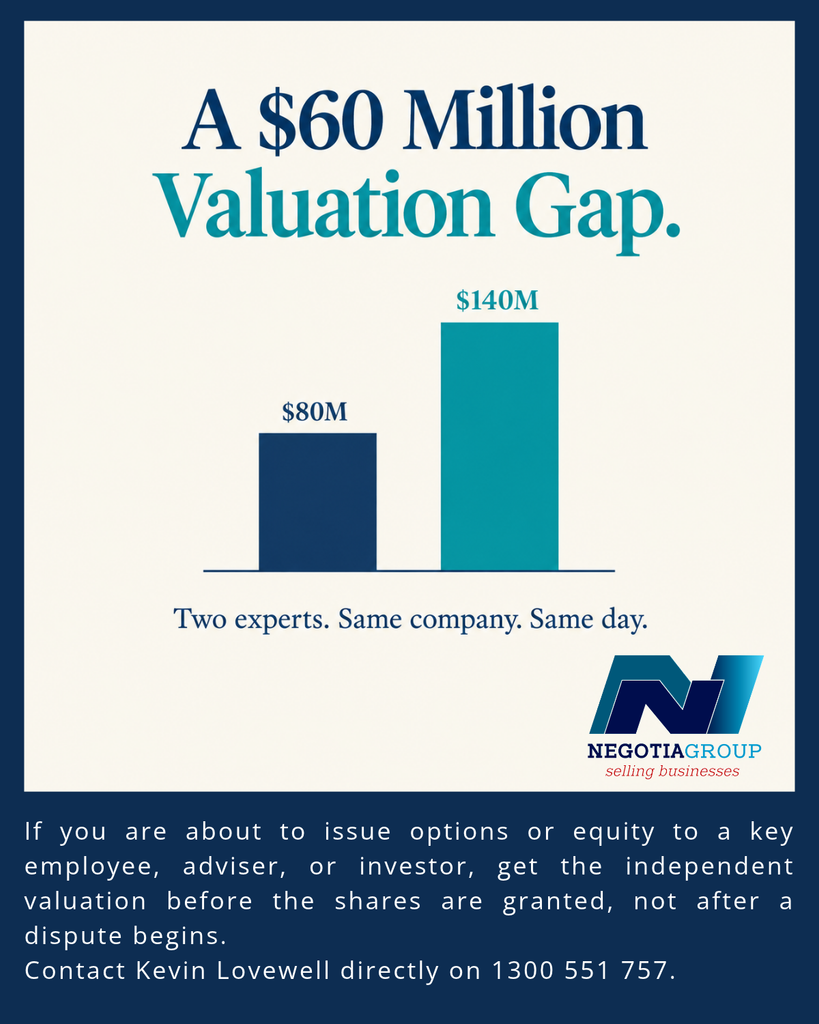
To support his claim, BBHF engaged its own expert, who valued Sleeping Duck at between one hundred and fifty-eight point nine million and one hundred and eighty-two point nine million dollars as at 19 November 2021. The founders’ companies engaged their own expert, who valued the same business, on the same date, using the same financial records, at between ninety-eight point one million and one hundred and one point three million dollars. The two ranges do not even touch.
Two qualified experts, the same company, the same set of facts, and a gap of roughly sixty million dollars at the closest point. What is a court, or a business owner, meant to make of that?
In this case, the honest answer is: nothing at all, because the valuation dispute never had to be resolved. The Court dismissed Mr D’s oppression claim entirely, finding that the underlying allegations, that he had been unfairly excluded from management and diluted contrary to an agreement, simply were not made out on the facts. Two years of expert reports, a joint report, and concurrent expert evidence given at trial addressed a question the case never actually turned on.
The part of the judgment I think deserves more attention happened years earlier, and it is far quieter. When the founders set the exercise price for the employee share option plan in 2020, they did not simply pick a number. Their adviser told them the price needed to sit above an independent valuation obtained from RSM, which had assessed the company at thirty-four point six million dollars on a minority interest basis. They followed that advice. Justice D found that relying on independent, professional advice to set the strike price was commercially prudent and reasonable, even though the shares were, by the time the plan was actually entered into, worth considerably more than the price set.
The hundred-million-dollar dispute cost two years and never had to be decided.
The independent valuation obtained years earlier decided the point that actually mattered.
Perhaps the most telling detail in the whole judgment is one line, written by Mr D himself, years before any of this litigation began: that he did not think an external valuation event was needed for his own options. It is a hard sentence to read back, from the other side of a Supreme Court judgment running to hundreds of pages.
For any business owner issuing options or equity to a key employee, adviser, or early investor, the practical lesson is not about finding the right expert once a dispute has already started. It is about obtaining an independent valuation at the point the shares or options are actually granted, and following it. That single step is what the Court found protected Sleeping Duck’s founders, and it costs a small fraction of what either side ultimately spent proving, or disproving, a number that in the end nobody needed.
Kevin Lovewell is a Registered Business Valuer with over thirty-five years of experience in business valuation and brokerage. This article is general commentary on a reported court decision and does not constitute legal advice specific to your circumstances.
If you are about to issue options or equity to a key employee, adviser, or investor, get the independent valuation before the shares are granted, not after a dispute begins. Contact Kevin Lovewell directly on 1300 551 757.