
The pandemic fundamentally altered how businesses operate, and consequently, how they should be valued. Yet many business owners remain unaware of how these changes have affected their enterprise worth, positively or negatively.
Consider this: when did you last examine how your lease arrangements, supply relationships, or customer inquiry patterns have evolved since 2020? If you operate as a tenant, have you assessed how reduced commercial property demand might affect your renewal negotiations? Have you quantified the financial impact of changes to your supplier relationships or customer acquisition channels?
Business valuation is not merely something you commission when divorce proceedings commence, acquisition offers arrive, or succession planning becomes urgent. Professional valuation serves as a management tool, a torch illuminating not only what your business is worth, but why it holds that value, what strategic actions you should prioritise, and where immediate opportunities for value enhancement might exist.
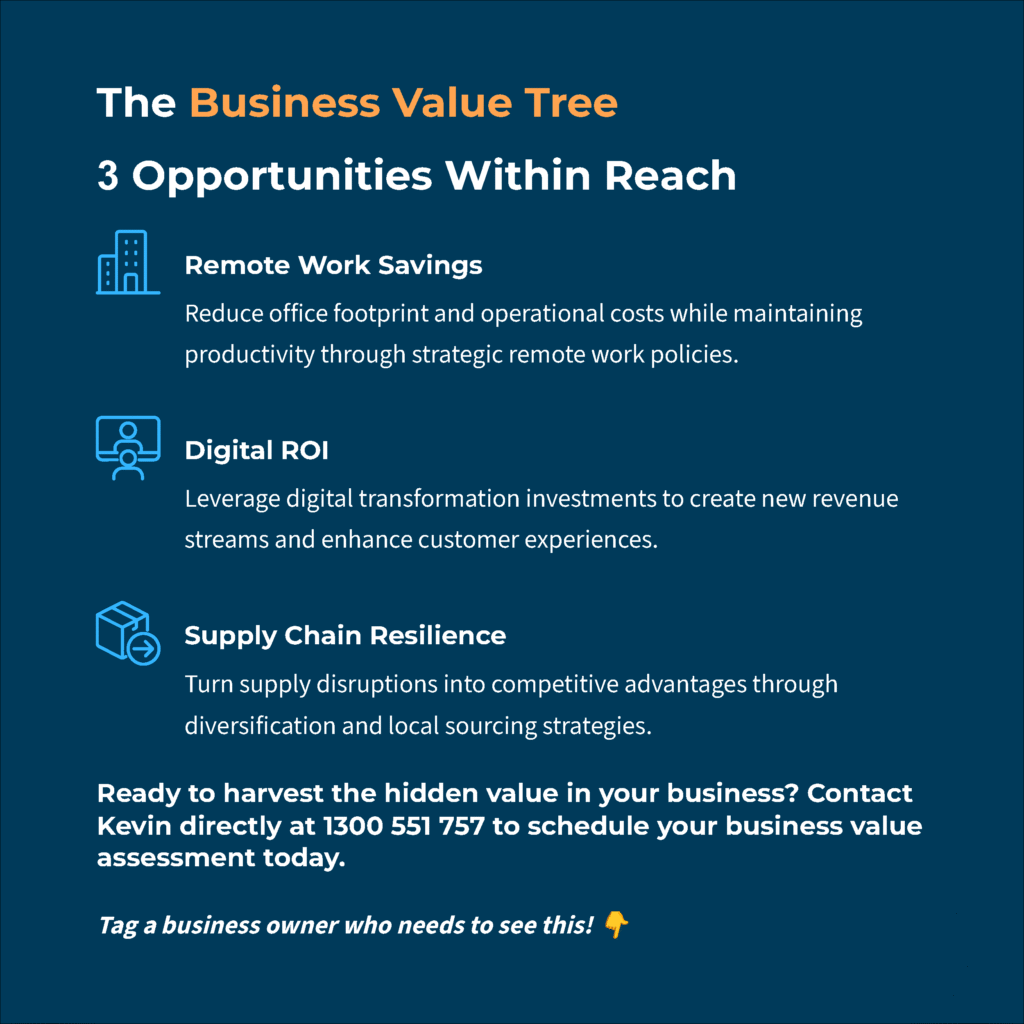
1. The Remote Work Revolution Has Redefined Overhead Structures
Have you investigated the true financial impact of your workspace changes since 2020? Many business owners recognise they are spending less on commercial rent, but few have quantified how this affects their enterprise value.
The shift to remote and hybrid arrangements has fundamentally altered the relationship between operational costs and revenue generation. If you previously required substantial commercial premises but now operate efficiently with reduced property footprints, this transformation may have significantly enhanced your business value.
Yet the valuation implications extend beyond simple cost reduction. Reduced dependency on physical location may broaden your potential buyer pool, as geographic constraints become less relevant. However, have you considered whether your remote operations have affected customer relationships, team productivity, or service delivery quality?
Professional valuers distinguish between temporary cost savings and sustainable structural improvements. They identify the “low-hanging fruit”, immediate opportunities to capture and enhance the value created by your operational changes.
2. Digital Transformation Has Accelerated Customer Acquisition and Retention
When did you last analyse your customer inquiry pipeline compared to pre-2020 patterns? The pandemic forced rapid digitalisation across virtually every industry, yet many business owners have not quantified the value implications of these changes.
Have you assessed whether your digital adaptations, website improvements, online sales capabilities, social media presence, or customer service platforms have genuinely improved customer acquisition costs or retention rates? Digital capabilities may represent significant competitive advantages that enhance business value, but only if they create measurable, sustainable improvements.
The critical question is not whether you adapted digitally, but whether these adaptations translate to genuine value creation. Professional business valuers apply rigorous methodologies to distinguish between pandemic-driven temporary increases in digital engagement and permanent shifts in customer behaviour that justify enhanced business valuations.
Understanding these metrics reveals where additional digital investment might yield immediate value enhancement of your digital “low-hanging fruit.”
3. Supply Chain Adaptations Have Created New Risk and Opportunity Profiles
Have you assessed how supply chain disruptions affected your business relationships and operational costs? Many business owners experienced supplier challenges, but few have analysed the long-term value implications of their adaptive responses.
If you diversified suppliers, renegotiated terms, or developed alternative sourcing strategies, these changes may have created genuine competitive advantages. Conversely, if you return to the status quo, you could remain dependent on vulnerable supply chains. This represents a valuation risk that may affect your business’s worth.
For tenant businesses, particularly, supply chain resilience interacts with property arrangements in complex ways. Have you considered how supply access, delivery logistics, or storage requirements have changed since 2020? These operational factors directly impact both your risk profile and potential buyer appeal.
Professional valuers carefully assess how supply chain changes affect competitive positioning. They identify whether your adaptations justify premium valuations or highlight areas requiring immediate attention, operational “low-hanging fruit” that could significantly enhance enterprise value.
The Strategic Value of Professional Business Valuation
These post-pandemic changes have made accurate business assessment both more complex and more critical. Yet the greater challenge facing business owners is not complexity—it is the risk of overlooking value-enhancing opportunities that exist within their enterprises.
Professional business valuation serves multiple strategic purposes beyond external requirements. It can function as a cost-effective management diagnostic tool. If used correctly, it will show not only what your business is worth, but why it holds that value, which operational changes have enhanced or diminished its worth, and where immediate opportunities for improvement exist.
Consider the “low-hanging fruit” within your enterprise: underutilised digital capabilities, inefficient overhead structures, or supply relationships that could be optimised. Professional valuers who adhere to International Valuation Standards possess the expertise to identify these opportunities while providing accurate, defensible assessments.
Whether planning strategic initiatives, assessing operational performance, or preparing for future transactions, understanding your true business worth provides the foundation for informed decision-making. The question is not whether you require professional valuation—it is whether you can afford to operate without this strategic insight.
For expert business valuation services that accurately reflect your post-pandemic business reality, contact Kevin Lovewell directly on 1300 551 757. Professional valuation expertise ensures you receive accurate, defensible assessments that properly reflect your business’s worth in today’s transformed business environment.