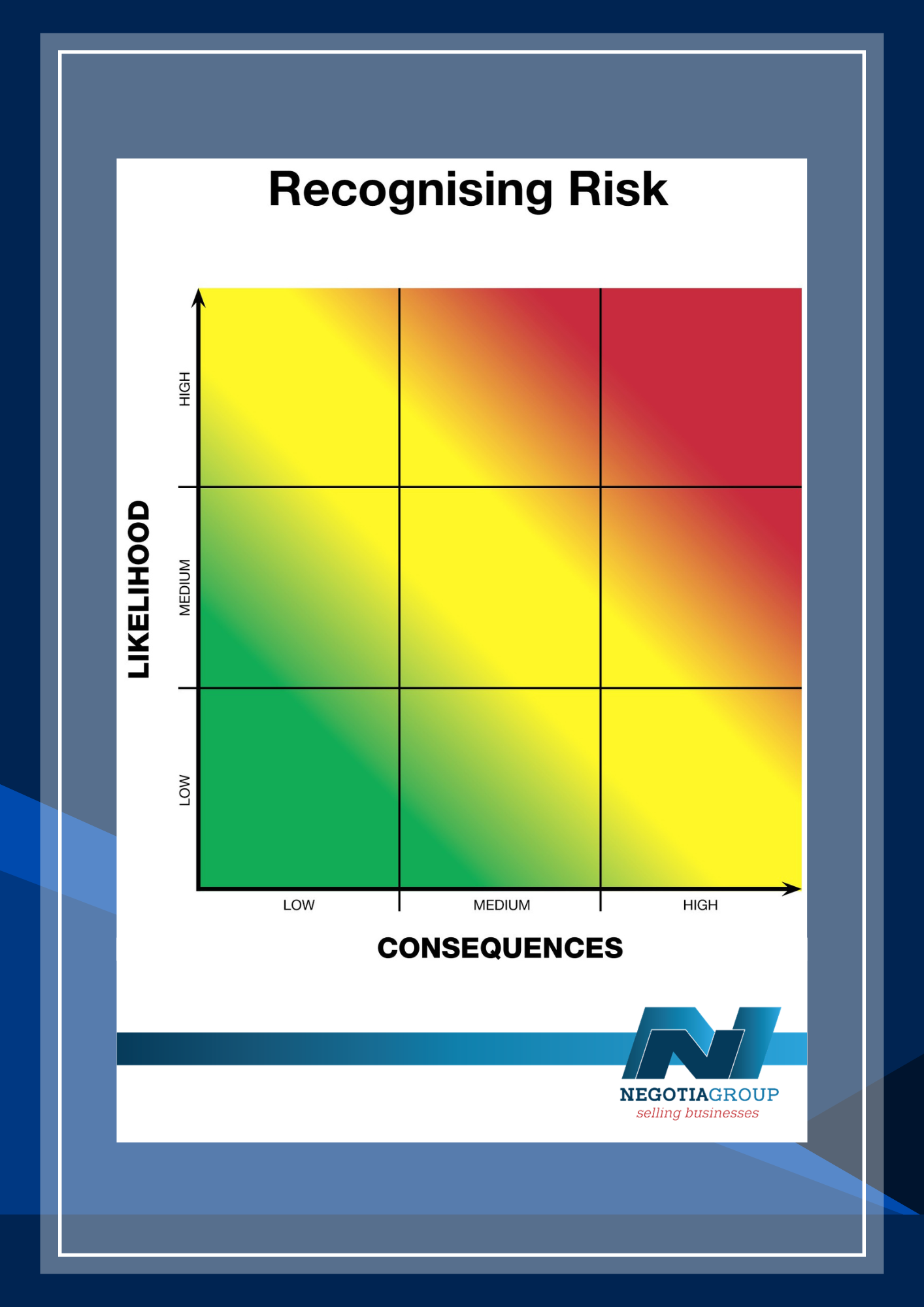
Most business owners treat risk management like dental visits: necessary, but something to postpone. This approach misses a fundamental truth: business risk is not something to eliminate, it is something to navigate with confidence.
Every business decision produces an outcome. That outcome may not match your expectations, but it does not mean your decision was wrong. I call this the Law of Unanticipated Outcomes; every result provides data for your next decision.
Here are three strategies that reduce exposure whilst positioning your business for growth.
Strategy One: Document Your Decisions
The Problem: You cannot learn from decisions you cannot remember making.
The Solution: Create a simple memory process or personal decision record for significant business choices:
- What you decided and why
- What information you considered
- What alternatives you evaluated
- What assumptions you made
When outcomes differ from expectations, your process memory reveals what happened and why. A manufacturing client expanded production based on one order from one customer’s projections. When demand failed to materialise, it turned out they had not validated the broader market. This insight led to diversifying their customer and income base before further expansions, turning a setback into a competitive advantage.
Strategy Two: Backup Systems
The Problem: Every business is a chain of activities… and there exist single points of failure that do severely affect operations.
The Solution: Identify those “weak-links” or vulnerabilities and create redundancy.
Key People: If your top performer was unavailable tomorrow, could operations continue? Cross-train employees and document processes.
Suppliers: The corner shop relying on one supplier faces different risks than one with three reliable sources.
Customers: Professional services firms with sixty per cent revenue from one client operate differently than firms where no relationship exceeds fifteen per cent of income.
Building redundancy costs time and effort upfront, but it prevents business disruption when critical functions fail.
Strategy Three: Create Early Warning Systems
The Problem: Nearly all business problems announce themselves early, if you know what to watch.
The Solution: Monitor key “lead” indicators before issues become critical:
Cash Flow: Monthly forecasting updated weekly during busy periods provides visibility to adjust operations before problems threaten survival.
Customer Satisfaction: Regular feedback collection, not just complaint response.
Employee Engagement: Informal conversations and formal surveys, high performers rarely leave without warning signs.
Market Changes: Watch competitors, suppliers, and industry shifts that might affect your positioning.
Simple periodic reviews of key indicators combined with weekly attention to immediate concerns provide early detection without overwhelming your schedule.
The Bottom Line
These strategies transform risk management from crisis response into business strength. When you document decisions, build redundancy, and create early warning systems, you develop confidence to make decisions knowing you can handle whatever outcomes emerge.
Risk will always exist in business. Your choice is whether to manage it systematically or hope it manages itself. These three approaches require modest investment but fundamentally change how your business responds to uncertainty.
The businesses that thrive over decades understand risk, prepare for it, and use it as a competitive advantage against unprepared competitors.
Consider this: if you spend your time avoiding risk, who is busy embracing it and overtaking your business?
Ready to strengthen your business foundation and reduce operational risk? Whether you need business valuation, strategic planning, or guidance preparing for sale, Negotia understands the challenges facing business owners today.
Contact me, Kevin Lovewell, directly on 1300 551 757 to discuss how Negotia Group can help secure your business future and maximise your investment value.